
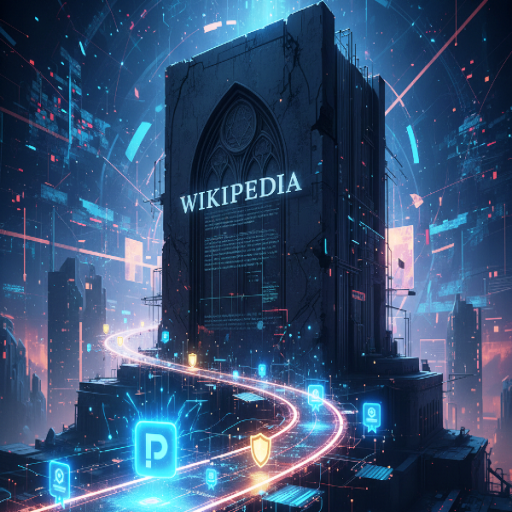
To
beat the massive reach of Wikipedia, you should not try to write wider; you must
write narrower. Focusing your scope on a single, primary keyword like Authority
Content Writing and supporting it with specific, high-value angles is the
strategic move that guarantees top-tier visibility. The belief that only the
biggest, oldest websites get the top spots is outdated. Google's standards have
changed, shifting from sheer size to demonstrated expertise.
The
shift from sheer size to demonstrated expertise requires adoption now more than
ever, with projections showing the global content marketing industry could
reach $1.95$ trillion by $2032$ and $90\%$ of marketers agreeing that content
creation remains the most important skill for success. This monumental growth
means the competition for trust is fiercer than ever—and only content built on
E-E-A-T will capture market share. This shift creates a credibility loophole
small writers and businesses can leverage immediately.

This
approach uses new SEO writing best practices to show Google you not only cover
a topic but own it. Topical authority requires a deliberate content structure
that satisfies the principles of E-E-A-T: Experience, Expertise,
Authoritativeness, and Trustworthiness. We explain five concrete secrets that
allow you to rapidly build trust and move your content ahead of the generic,
high-volume results dominating search today.
1. The 3-Part Citation Strategy: Wikipedia
Citation Tips for Authors
Wikipedia
ranks highly not because it writes better, but because it sources better. It
applies a rigid three-point citation structure that Google’s systems have
learned to trust. You must adopt this same mentality when you write content for
Google E-E-A-T. This is the most crucial of the E-E-A-T principles.
Concrete Data Point: Every claim you
make that is not common knowledge requires backup. Instead of stating,
"Online commerce grew last year," state, "Online commerce grew
by $15.6\%$ in Q4 of $2024$, reaching $1.3$ trillion in sales".
Official Source Link: The link must
point to the primary source of the data. This means linking directly to a
government statistic, a university study, or an industry analyst report. Avoid
linking to another blogger who cited the source—go to the root.
Contextual Integration: Integrate the
citation into the sentence structure, making it a natural part of the flow.
This demonstrates you possess the experience necessary to interpret the data.
The
result is a higher trustworthiness score for your article, allowing you to
establish authority faster than sites that just link to their own content. (For
more strategies on organizing large amounts of content, read about the Reverse
Outline Method That Drafts Your Novel in 7 Days.)
2. The Subject-Specific Depth Loophole
Generic
content is easy to create but hard to rank. To achieve Authority Content
Writing, you must choose a niche sub-topic and cover it more deeply than the
comprehensive, yet shallow, entries you are trying to outrank.
For
example, if the general topic is "Financial Planning," a Wikipedia
article will cover the history, types, and basic concepts. You should target a
specific, low-competition sub-topic like "Tax Implications of Roth
Conversions for Digital Nomads."
Demonstrate Expertise: Use technical
terminology correctly and explain complex concepts clearly. When explaining a
term, do not just define it; explain how it applies in a real-world context for
your audience.
The "So What" Test: After any
section, ask: "So what does this mean for the reader?". The audience must
immediately connect the information to their own situation or goals. This makes
your content relevant and encourages them to continue reading.
This
focused depth fulfills the expertise component of E-E-A-T, telling Google that
you specialize where others generalize.
3. The Contextual Experience Signature
Google
now prioritizes content that shows firsthand experience. This is hard to fake
but basic to include: integrate real examples and case studies that align with
your category.
The "I Did This" Example: Use a short,
clear example describing a specific outcome you achieved or observed. If you
write about software, include a screenshot of the output. If you write about a
creative process, include a brief story of how you applied the advice.
Name and Timeframe: When presenting
examples, use concrete details. Instead of saying, "A client saw
results," say, "In June 2024, Jane Doe, a self-published author,
increased her book sales by $40\%$ after implementing this pricing
strategy". This detail reinforces trustworthiness.
Using
this "experience signature" shows readers and search engines you are
not just repeating facts; you are applying them.

Plainly
repeating the Primary Keyword is not enough. The secret to strong Authority
Content Writing is using related terms and synonyms—the LSI keywords—to confirm
your comprehensive understanding of the subject.
Avoid Stuffing: Never force
keywords into sentences. Use synonyms for your main term. For example, instead
of using the phrase Authority Content Writing every time, integrate terms like expert
article creation, credibility-focused text, and authoritative online writing.
Placement Matters: The Primary
Keyword should appear in the H1, the first paragraph, and at least one H2 or H3
heading. The long-tail phrases like write content for Google E-E-A-T and Wikipedia
citation tips for authors should fit naturally into the text 1–3 times.
This
strategic integration maintains a smooth, logical flow, which requires reader
retention and positive SEO signals. (For related branding strategies, consider
exploring Professional Pen Name Tips for Maximum SEO and Brandability.)
5. Using the FAQ Section to Capture
"People Also Ask"
A
strong article fully satisfies the Google search intent. Often, a single
primary search term leads to many related secondary questions. The FAQ section
is your direct opportunity to answer those secondary questions and capture
visibility in the "People Also Ask" (PAA) boxes.
The
questions you choose must relate directly to Authority Content Writing. The
answers must be concise, accurate, and structured to stand alone. By providing
these specific answers, you strengthen your article's overall relevance and authoritativeness
across the entire topic cluster.
Clarity and Brevity: The answer
should be plain and direct. Avoid complicated sentences. Keep the answer
focused on the specific question asked.
Logical Structure: Use subheadings
(H2, H3, etc.) to give your article a clear, logical structure that supports
both readability and ranking. The FAQ section serves as the final, targeted H2
that addresses residual search intent.
1. What is Authority Content Writing?
Authority
Content Writing is the practice of creating online material that demonstrates
verifiable experience, expertise, authoritativeness, and trustworthiness
(E-E-A-T) to both readers and search engines, resulting in higher search
rankings.
2. How does E-E-A-T affect content ranking?
E-E-A-T
is a core component of Google's Quality Raters Guidelines. High E-E-A-T signals
that content is reliable and comes from a trusted source, which is necessary to
rank for high-stakes topics.
3. Is it necessary to write content for Google
E-E-A-T?
Yes,
it is necessary to write content for Google E-E-A-T because failing to meet
these standards limits your content's ability to rank high, especially in
categories related to specialized or sensitive topics.
4. What is the difference between expertise and
experience in E-E-A-T?
Expertise
relates to formal knowledge, certifications, or specialized skill in a topic,
while experience involves having real-world, firsthand interaction with the
subject matter (e.g., applying a strategy or observing results).
5. How can a new website establish topical authority
quickly?
A
new website can establish topical authority quickly by using specific citation
strategies, focusing on narrow sub-topics for depth, and integrating clear,
factual experience examples.
6. What is the single best way to beat Wikipedia's
search ranking?
The
best way to beat Wikipedia is not to write wider, but to write narrower. Target
a highly specific sub-topic and cover it in greater, citable depth than the
general encyclopedia entry.
7. Should I link to Wikipedia for my content?
No,
for Authority Content Writing, focus on linking to primary, official sources
(studies, government reports, research journals) instead of generic secondary
aggregators like Wikipedia.
8. How can authors use Wikipedia citation tips for
authors to boost credibility?
Apply
the three-part citation strategy: use concrete data points, link directly to
the official source, and integrate the citation smoothly into your sentence
structure to improve your content's trustworthiness.
9. What are LSI keywords in SEO writing best
practices?
LSI
(Latent Semantic Indexing) keywords are related terms and synonyms that help
search engines understand the full context and scope of your article beyond the
main keyword, demonstrating topical authority.
10. How long should an authority article be?
An
authority article should be long enough to cover the topic in depth and fully
satisfy the reader's intent. The typical minimum for this type of detailed
content is 1200+ words.
Nov 30, 2025

Nov 19, 2025

Nov 11, 2025
Nov 11, 2025

Oct 15, 2025
Oct 15, 2025


Comments (0)
Leave a Comment
No comments yet
Be the first to share your thoughts!